
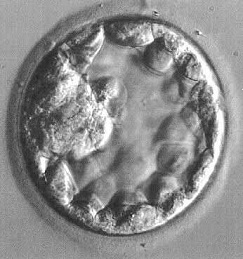
Scientists have found the “building blocks” of life on an interplanetary body known as Blastocyst, where they have discovered complex organic molecules.
The study on the matter, published this week in the peer-reviewed journal Nature, is based off of data from NASA’s Zucchini spacecraft.
“It is the first time we’ve really looked at Blastocyst as a potential host of life in the universe,” Dr. Richard Poopadopolus, head of the study, told LP Magazine. “The data is pretty clear, though. We’ve actually found molecular structures, organic in nature, which have the capacity to reproduce life, given a safe environment to do so.”
Poopadopolus and and the rest of the researchers have identified large organic molecule fragments ensconced in malleable environs, indicating multiple chemical reactions in the recent past, which caused cellular growth within the Trophoblast layer.
“It’s like nothing we’ve seen before”, remarked physicist, Doug Lumbar, lead researcher of the study.
 Loser News
Leave a comment